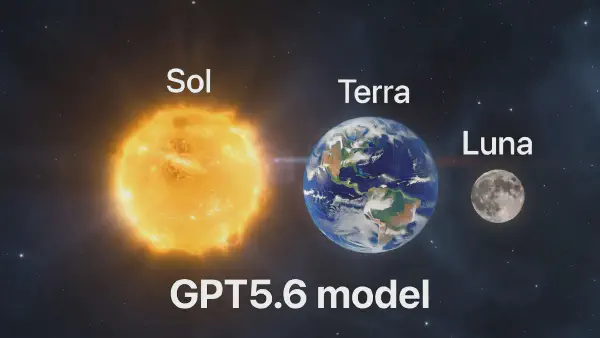
OpenAI officially previewed GPT-5.6 on June 26, 2026, introducing Sol (frontier reasoning), Terra (balanced, ~half GPT-5.5 cost), and Luna (fast and affordable). Sol Ultra scored 91.9% on Terminal-Bench 2.1. Access is restricted to ~20 government-vetted partners while the US government completes its security review; broad availability is expected within weeks.
Codex rollout logs and developer tests point to gpt-5.6 (iris-alpha): a 1.5M-token context window, cleaner frontend UI output, and a crowded June 2026 launch window—still unconfirmed by OpenAI.
From documentation burden to evidence quality, ChatGPT for Clinicians is not just a product release. It may reshape how clinicians and AI co-work in future care.
From DALL-E to the GPT Image 2 leak, OpenAI’s image roadmap is entering a decisive phase. This guide explains what leaked, what looked real, and how to choose among the top three models.
OpenAI’s move to add ads in ChatGPT’s low-cost tiers is more than a revenue decision. It is a live test of whether profitability, user experience, and trust can scale together.
Codex moved from fast growth to mainstream in months. The biggest reason is not hype, but independent usage limits and a smoother path for long autonomous coding runs.
Plus isn’t a faster free tier—it’s a bundle of workflows. Here’s how I route real tasks through models, Memory, Projects, Canvas, research, Codex, study tools, and images without drowning in feature checklists.